


We recently shared a detailed LinkedIn post about our complete journey in implementing all 12 recommendations from the EnterpriseReady.io framework. While that post covers our comprehensive transformation, we wanted to focus here on a few key transformations: some of which didn’t just help us meet enterprise expectations; they also became a competitive advantage, addressing gaps in the market that enterprises faced.
When we started adapting Facets for enterprise use, we expected many changes would simply be checking boxes: standard requirements like SSO and role-based access. What we didn't expect was finding significant needs that enterprises were struggling with.
Read this blog further to understand what were the most impactful transformations that became market advantages for us:
Key Transformations That Made the Difference
Product Assortment: From One-Size-Fits-All to Flexible Components
The traditional enterprise-ready approach simply suggests offering different product tiers. But as we worked with enterprises, we discovered a deeper problem: teams within the same organisation had vastly different needs and maturity levels. Some lacked automation entirely, while others had sophisticated systems in place.
Our edge:
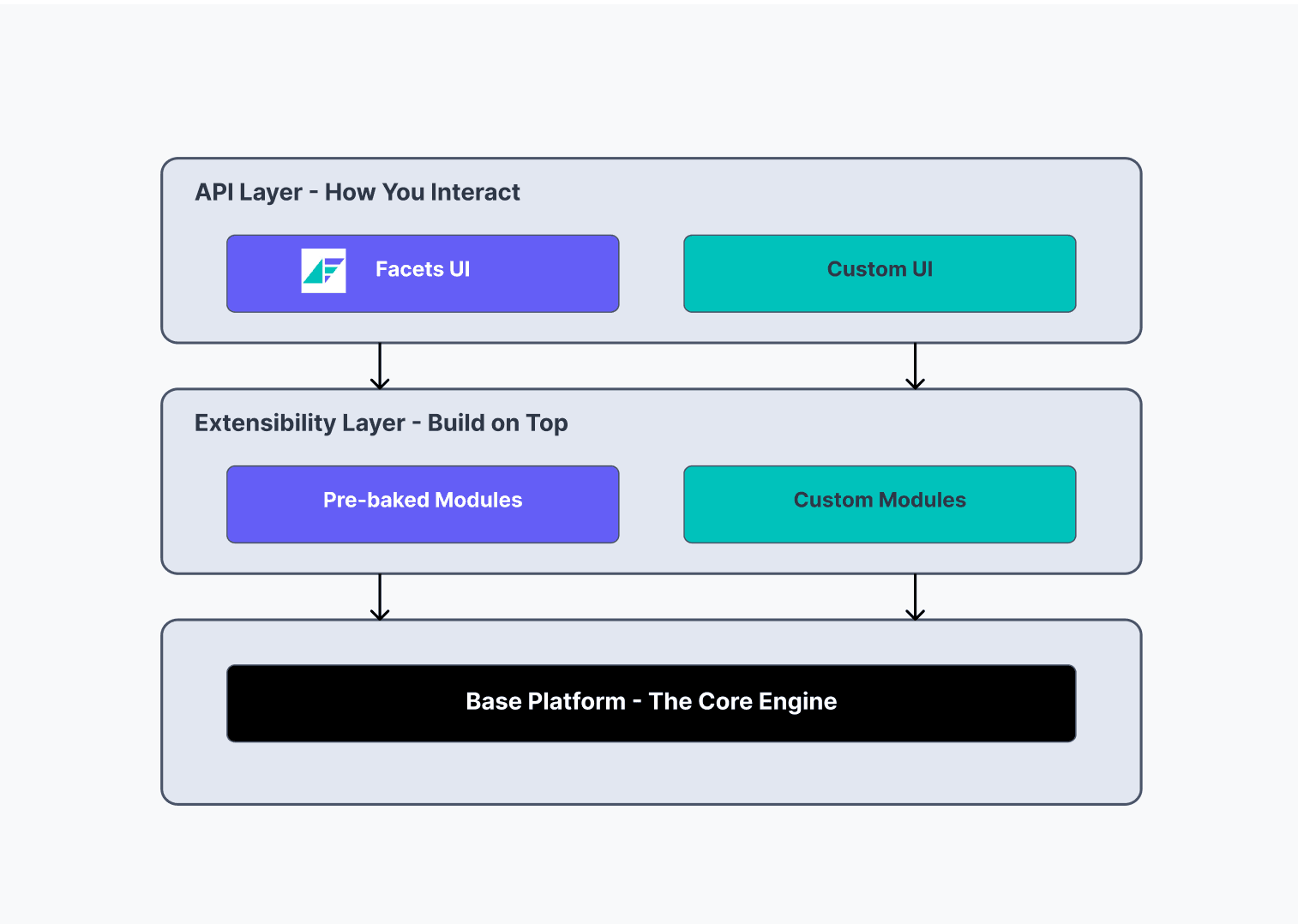
We transformed this challenge into an advantage by creating a modular platform that lets enterprises have both standardisation and flexibility:
- Teams can use our pre-built automation or bring their own
- Enterprises maintain central governance while teams keep their preferred workflows
- The API-first approach lets teams integrate with existing developer portals
The impact has been substantial: our customers now standardise cloud automation without forcing one-size-fits-all solutions on their teams. One of our customers, a Fortune 50 company, has replaced multiple tools with our flexible platform. A Fortune-50 automotive company reduced DevOps tickets by 75% across 350 applications and 1,500 engineers (one standard across the enterprise).
Audit Logs
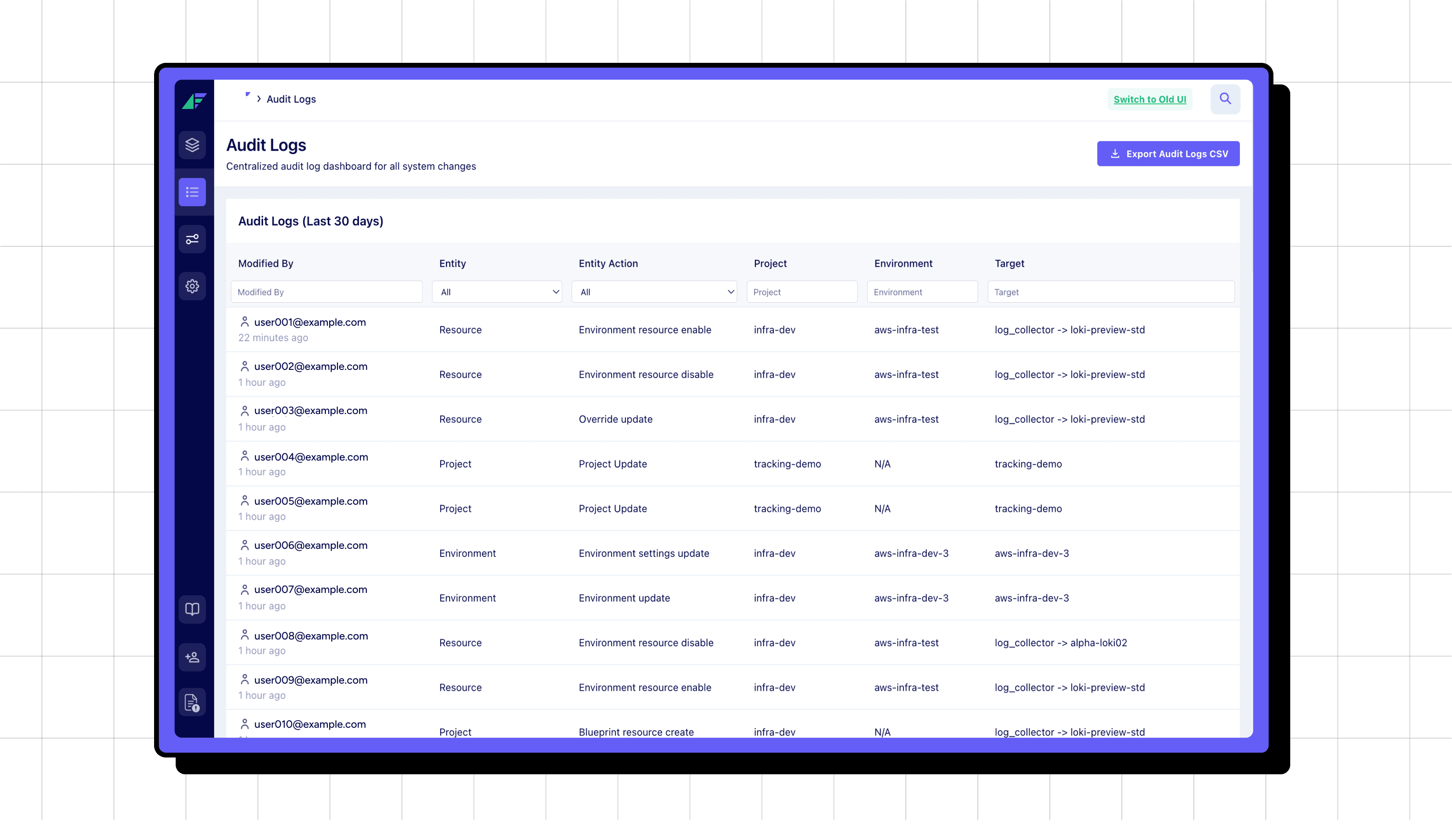
Enterprises need clear visibility into who makes changes and when, not just for security and compliance but also for operational transparency.
We discovered central IT teams cobbled together information from 20+ tools for audits and compliance and needed a single view for all the changes across their development toolchain.
Our edge:
We evolved basic audit logging into a unified governance solution that captures and correlates changes across the entire software delivery lifecycle. It is a single source of truth for infrastructure and environment changes. Every release records who triggered it, audit logs record the actions taken in Facets, and audit events can go to your own tools through notification channels. This structured record makes audits far more efficient.
Deployment Options
Enterprises wanted modern cloud tools but couldn't use multi-tenant SaaS due to security requirements. Most vendors offered clunky "on-prem" versions that felt like afterthoughts.
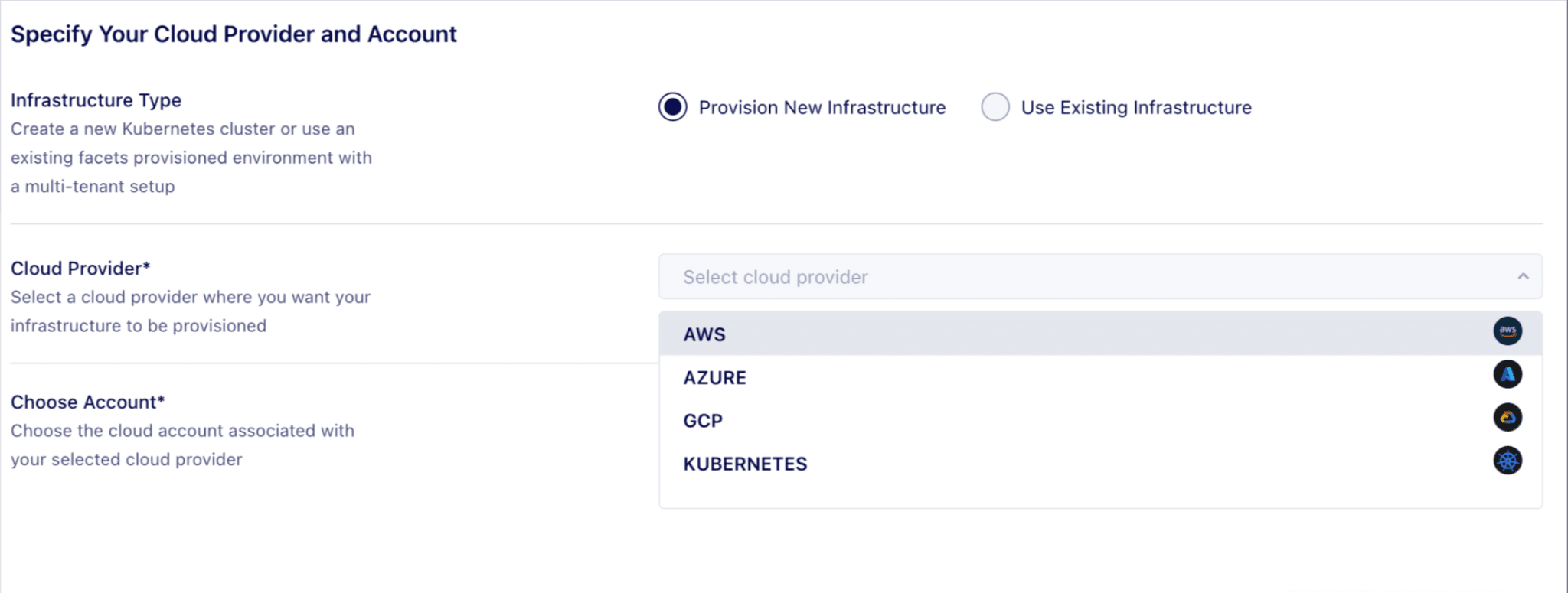
From the start, we built Facets to be self-hosted inside enterprise environments, ensuring data security. But as we expanded, customers needed more flexibility, including:
- Multi-cloud support across AWS, Azure, and GCP.
- High-availability and backup configurations for resilience.
- Deployment models that integrate seamlessly with enterprise security policies.
Our edge:
We've developed secure support workflows that respect their security boundaries without compromising on service quality. Facets became a solution not just for enterprises but also for SaaS companies looking to distribute their own software in secure environments. Today, Facets can also host the control plane for you, with a separate copy for each customer (hosting options).
Role based access control
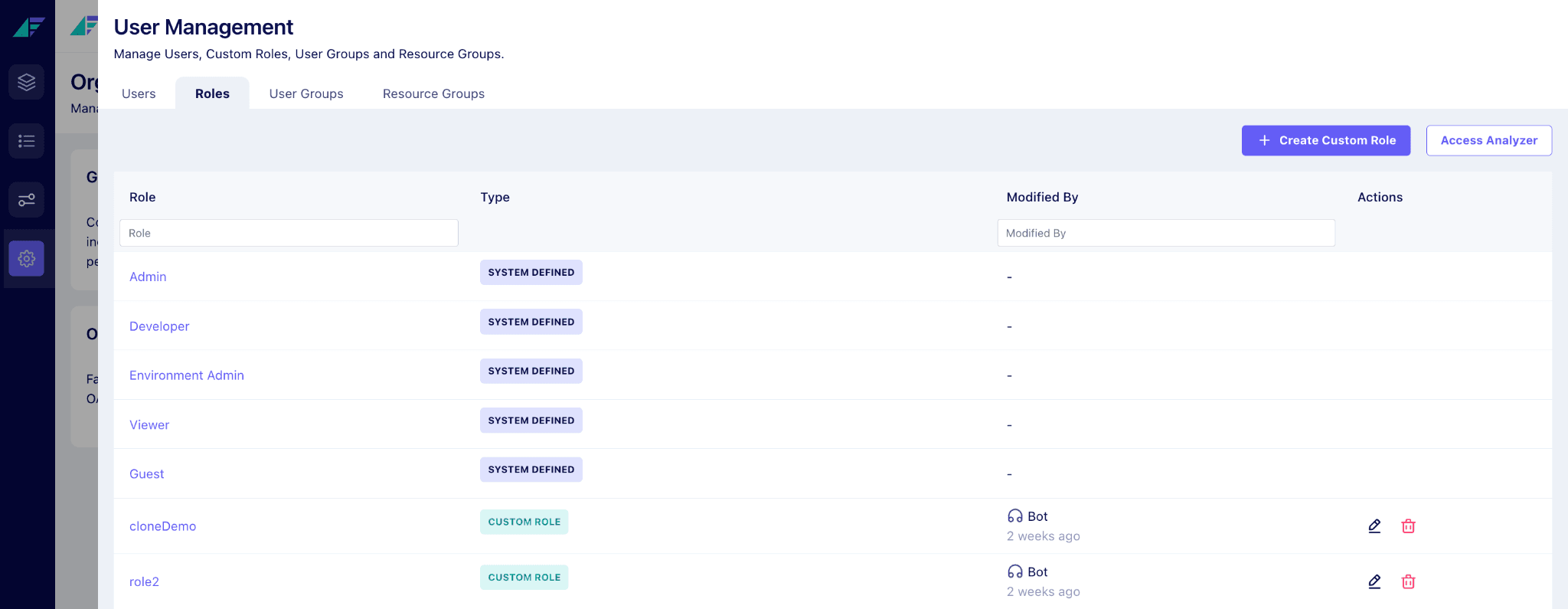
As organisations scale, it's harder to control the granular permissions across cloud tools, creating unmanageable IAM structures that can’t map to their complex organisational hierarchies. Companies then need to create hundreds of custom roles, and teams waste countless hours translating organisational structures into tool-specific permissions.
Our edge:
Our access control model fundamentally reimagines how permissions work. Instead of creating technical roles, permissions automatically align with organisational structure. A user's access adapts to context: they might be a viewer in production environments but have developer access in staging. The system understands organisational hierarchy, making it natural to implement concepts like "team lead" or "department manager" without creating special roles for each case. Rethinking IAM explains the model, including how AI agents act with the role of the person who uses them.
Change Management
Enterprise tools often push updates without considering complex production environments, leading to disruptions and upgrade anxiety. We turned this pain point into an opportunity for innovation.
Our edge:
Our change management lets customers test platform upgrades in lower environments first, so teams catch integration issues long before they affect production. Changes to their own infrastructure follow the same discipline: each one is a release with a plan to review, and a resource can be rolled back to an earlier release.
Looking Forward
While we've made significant progress, we see this as just the beginning. Enterprise needs continue to evolve, and we're committed to staying ahead. We're currently exploring AI-native analytics, expanding our integration ecosystem, and building automation that makes complex enterprise governance feel effortless. Since then, AI has changed what enterprises need from delivery; why Facets explains how.
For those on a similar journey: enterprise-readiness goes beyond checking boxes. It means understanding deep organisational needs and turning them into opportunities for innovation.
Want to learn more about our enterprise journey or share your experiences? Let's connect! Visit Facets.cloud or book a demo here.